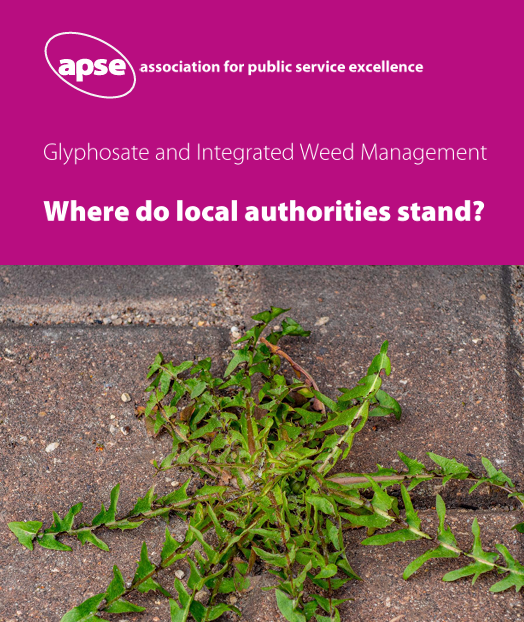
Local authorities are taking steps to gradually reduce their reliance on glyphosate, despite concerns around the effectiveness and cost of alternatives, according to new research by APSE.
The findings, published in APSE's Glyphosate and Integrated Weed Management: Where do local authorities stand? report, come as debate around the future use of glyphosate continues and the sector awaits the outcome of the Health and Safety Executive's consultation on its future authorisation.
The report found that 71% of local councils have implemented glyphosate reduction programmes or significantly reduced usage, with the biggest reductions made in high-footfall areas, such as parks, play areas and open spaces.
Local councils are also actively exploring alternative approaches to herbicide-based weed management. Manual weeding, mechanical weed removal and wildflower management were identified as the most commonly trialled measures.
Despite this, the report found that 84% of respondents had concerns about the effectiveness of alternatives, with 87% reporting that their authorities continue to use glyphosate for specialist purposes such as invasive species control.
Cost and public perception were also cited as significant barriers to reduction, with one in two councils reporting that public expectations for tidy, weed-free streets can make it more difficult to reduce reliance on glyphosate.
Looking to the future, almost six in ten local authorities (59%) expect their use of glyphosate to decline, with 38% anticipating further reductions, 14% expecting most uses to be eliminated, and 7% predicting complete elimination. However, over a third (35%) expect current usage levels to remain broadly unchanged.
The findings suggest that, while the direction of travel is towards reduced glyphosate use, councils are taking a pragmatic approach, increasingly exploring integrated weed management strategies that balance environmental ambitions with public expectations and operational realities.
Matt Ellis, Principal Policy Lead for Parks and Greenspaces and author of the report, said:
“While the report's findings demonstrate a clear direction of travel towards reduced glyphosate use, local authorities continue to face significant barriers relating to cost, effectiveness and public expectations. As the sector considers the implications of the HSE consultation and future regulatory decisions, many councils are adopting integrated weed management approaches that balance environmental ambitions with operational realities.”
The full report can be found here.