By Jamie Gledhill, Technical Engineering Manager at Brett Landscaping and Building Products
As towns and cities become busier, the challenge of safely managing the interaction between vehicles, pedestrians, cyclists and critical infrastructure continues to grow.
From city centre public realm schemes and transport hubs to bridges, distribution centres and major highway networks, designers are increasingly looking for passive safety measures that can reduce risk without compromising the visual quality of the built environment.
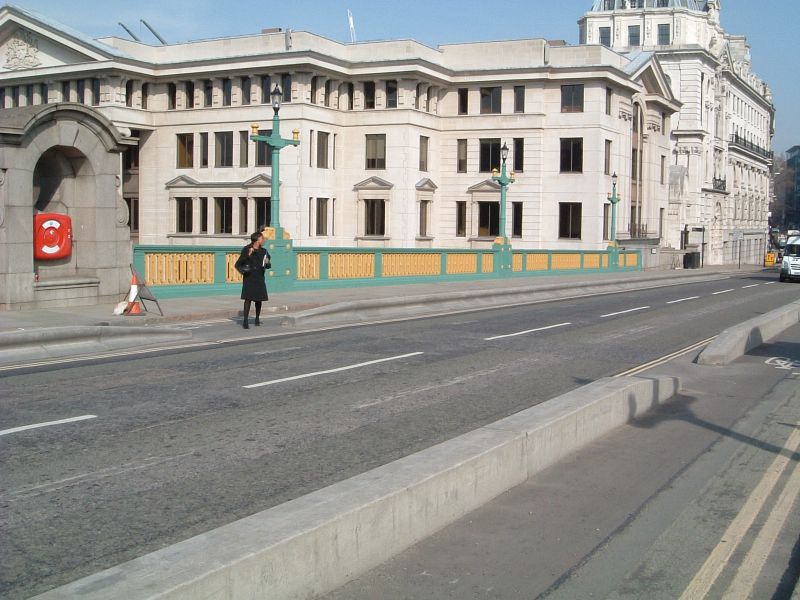
Containment kerbs have long played an important role in this regard. Unlike conventional kerbing, which is primarily designed to define carriageways and pedestrian areas, containment kerbs are engineered to control errant vehicles, helping to contain and redirect them back onto their intended path and reducing the risk of vehicles mounting footways, entering cycle lanes or striking adjacent structures.
Their ability to provide an effective yet unobtrusive safety solution has made them a vital consideration for modern urban design. Developed by Brett Landscaping and Building Products in the 1960s, the Trief containment kerb, as it has become known across the industry, effectively established the benchmark for this type of infrastructure. Remarkably, its core design has remained largely unchanged for more than 60 years, a testament to the effectiveness of the original concept.
The effectiveness of containment kerbs lies in their carefully engineered profile. A small kerb check provides an early warning to drivers, while the sloped shoulder and rounded bullnose work together to engage the tyre and guide the vehicle back into its original line of travel. Rather than allowing a vehicle to continue across a pavement or protected area, the kerb helps to contain and redirect it, significantly reducing the consequences of driver error.
Importantly, this performance is supported by rigorous testing. The original Trief containment kerb remains the only system to have been impact tested in accordance with BS EN 1317 Parts 1 and 2, with a 1,500kg vehicle projected at 50mph and a 20-degree impact angle. The testing demonstrated the kerb’s ability to successfully contain and redirect the vehicle to N1 certification. It concluded that the original Trief kerb fully complies with the acceptance criteria for the TB31 test (a standardised European crash test under BS EN 1317-2), with an ‘A’ rating for impact severity affording the occupants of the errant vehicle with the greatest level of safety.
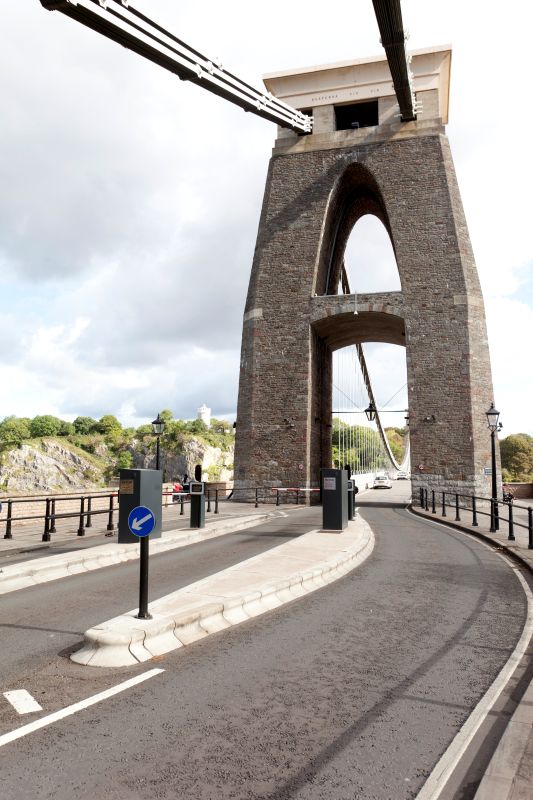
The applications for containment kerbs are wide ranging. Historically, they have been used extensively on highways, bridges and alongside critical transport infrastructure. Today, they are increasingly specified to protect railway bridges, cycle lanes, pedestrian routes, security checkpoints, weighbridges, toll facilities and distribution centres, helping to safeguard both people and assets from accidental vehicle incursions.
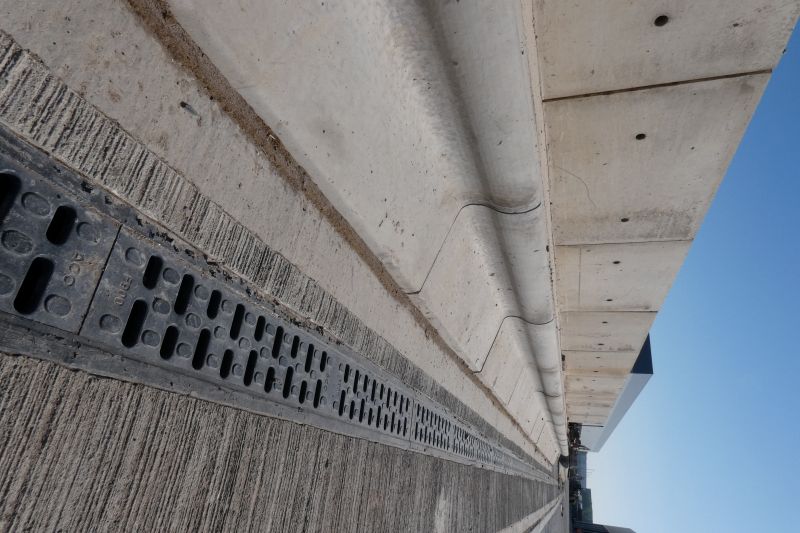
In many cases, they offer an effective alternative to more visually intrusive protective measures. This is particularly relevant in urban environments, where safety infrastructure must often sit comfortably within public spaces. Modern containment kerbs are available in a variety of finishes, including granite and exposed aggregate options, enabling them to blend seamlessly into conservation areas, historic settings and high-profile public realm projects. This allows designers to create safer environments without detracting from the character and visual appeal of a scheme.
Another advantage is the ability to retrofit containment kerbs into existing highways with minimal disruption. Because the original Trief kerb was developed to standard kerb dimensions of 3ft (914mm), local authorities and contractors can often replace conventional kerbs with containment kerbs on a like-for-like basis, simplifying upgrades where improved safety performance is required.
As urban areas continue to evolve, the demand for infrastructure that combines safety, practicality and good design will only increase. By incorporating containment kerbs into highway and public realm schemes, architects, engineers and developers can create environments that are not only more resilient and safer for users, but also better prepared for the challenges of the future.